

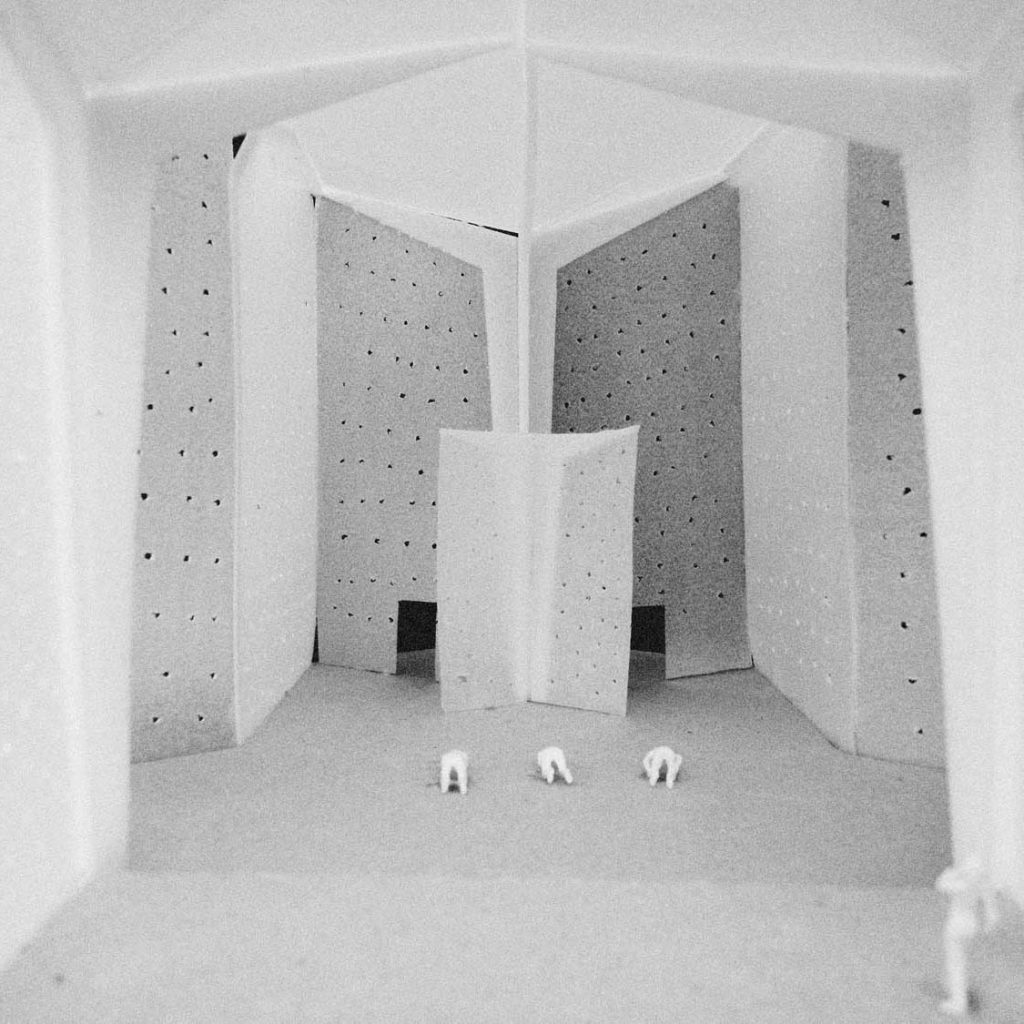
Model study of the interior of the mosque © Laure Nashed
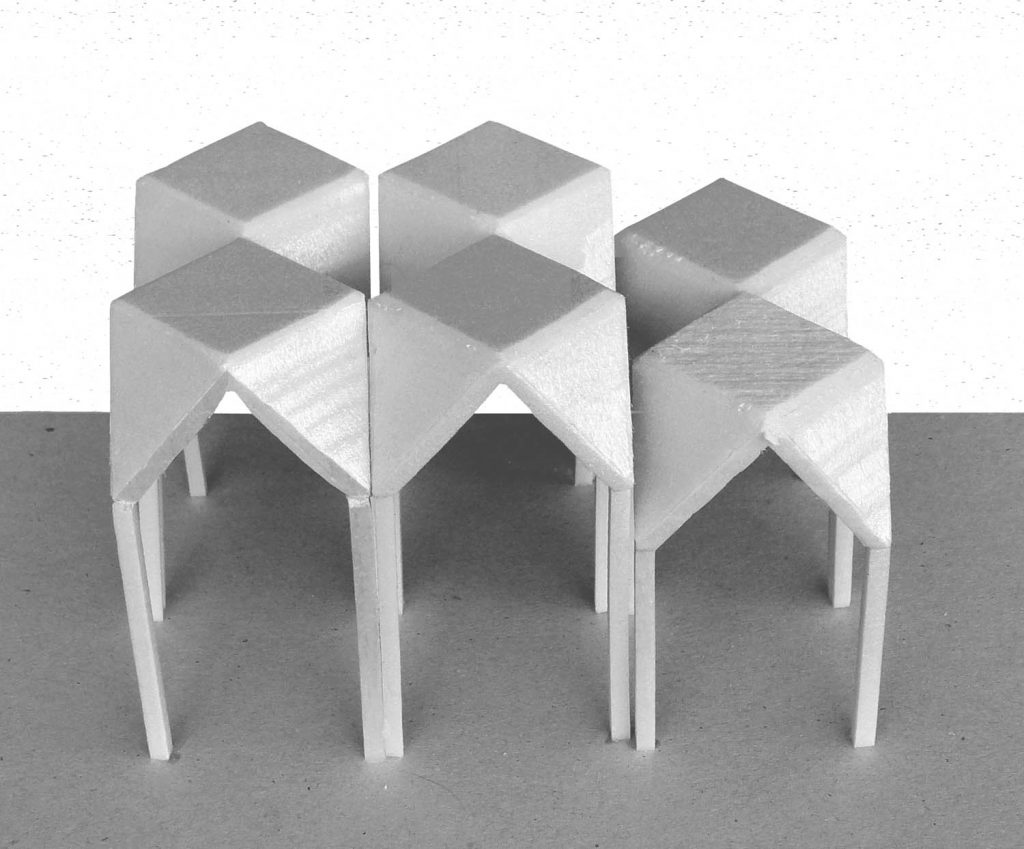
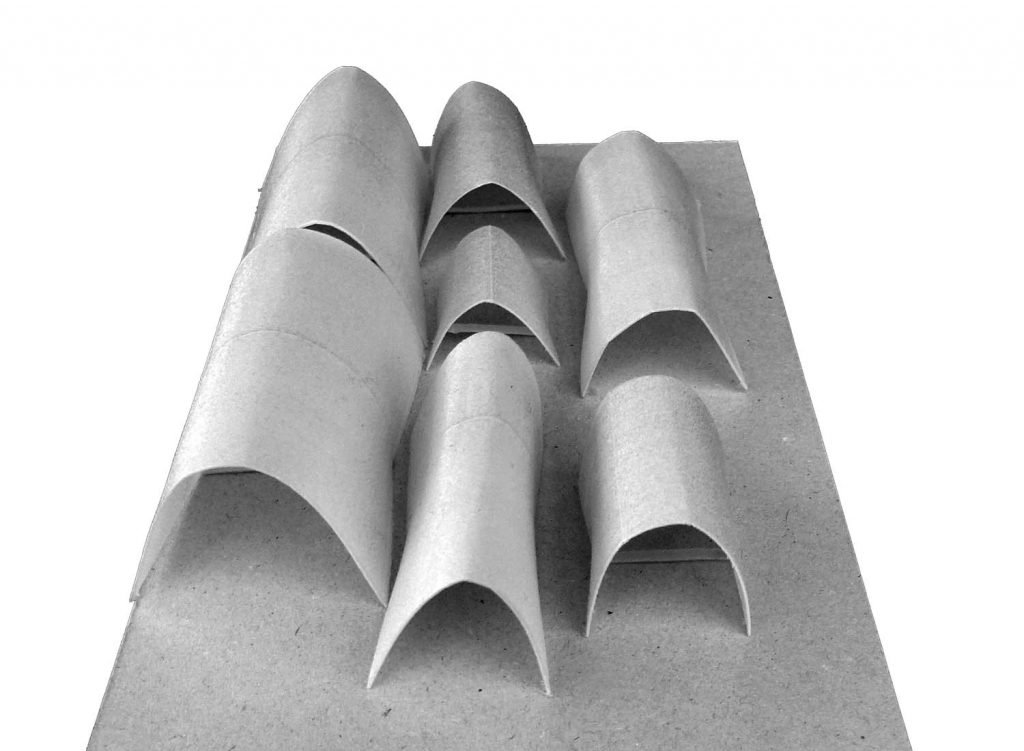
Model studies for form design
© Laure Nashed
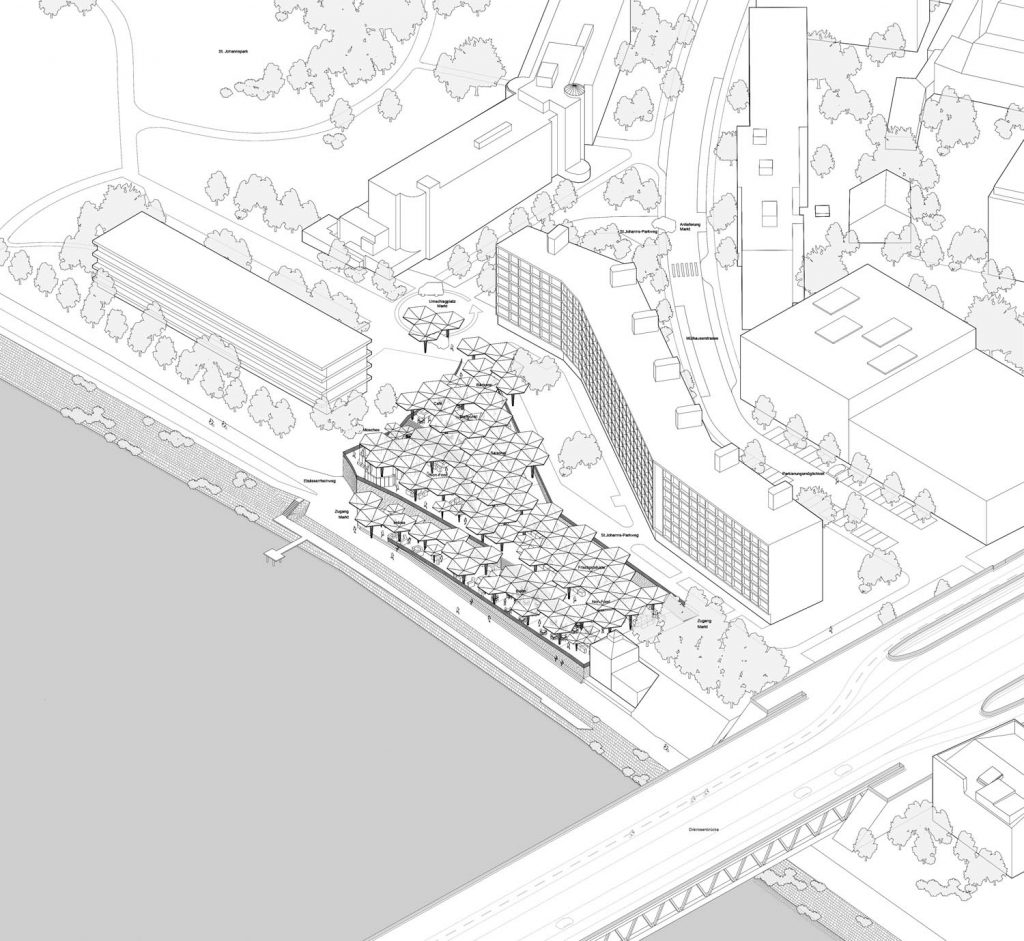
Axonometric drawing
© Laure Nashed
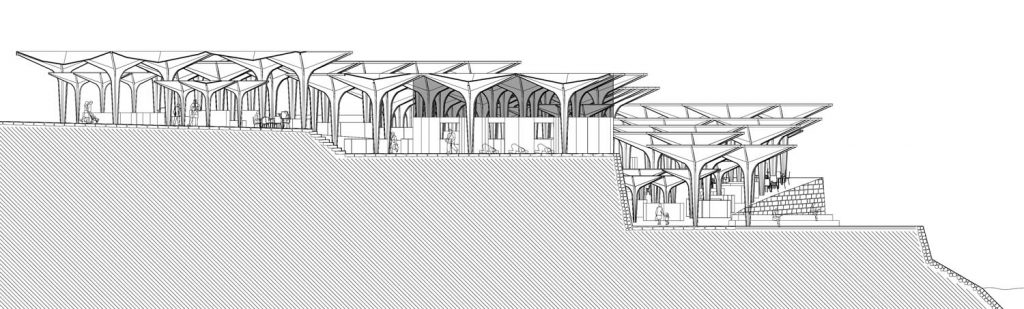
Section
© Laure Nashed
› 2013, Design project in the bachelor’s studies in university exchange at ETH Zurich with guest lecturer Manuel Herz.
› At a time when there were heated discussions in Europe about how to deal with Islamism, we looked at the place of prayer for Muslims under the guidance of guest lecturer Manuel Herz and asked ourselves what form would be architecturally suitable for Basel.
For the design of a Swiss mosque, I did not only deal with architectural questions. I used the semester to develop a perhaps utopian idea in which a frightened society is offered a space in which it can approach the foreign. As an architectural typology, I used the market, which occurs in all cultures. It represents a place that, as a lively meeting place, allows the most diverse people to come together and creates a cultural mix. In this environment, it seemed fitting to me to develop interest and curiosity for the foreign. The fresh market on the banks of the Rhine consists of tulip-shaped market stalls. Under the tulip roofs, at the southernmost point, is a mosque that flows smoothly into the market space. It may seem surprising that a religious space has been placed in the middle of a noisy environment. However, if one looks at mosques in various Islamic countries, one finds many examples of Islamic prayer rooms in the midst of the bazaars there. In European countries, a few groups of Muslims use public street spaces for communal prayer. Compared to other religions, Islam is less bound to permanent prayer spaces.
The architectural expression of the project should do justice to both the market and the mosque. The filigree steel construction chosen is based on the one hand on the historical European market halls and on the other hand on the pointed arches of Islamic architecture. The prayer room is designed in such a way that it allows views without disturbing those praying.
› 2013, Design project in the bachelor’s studies in university exchange at ETH Zurich with guest lecturer Manuel Herz.
› At a time when there were heated discussions in Europe about how to deal with Islamism, we looked at the place of prayer for Muslims under the guidance of guest lecturer Manuel Herz and asked ourselves what form would be architecturally suitable for Basel.
For the design of a Swiss mosque, I did not only deal with architectural questions. I used the semester to develop a perhaps utopian idea in which a frightened society is offered a space in which it can approach the foreign. As an architectural typology, I used the market, which occurs in all cultures. It represents a place that, as a lively meeting place, allows the most diverse people to come together and creates a cultural mix. In this environment, it seemed fitting to me to develop interest and curiosity for the foreign. The fresh market on the banks of the Rhine consists of tulip-shaped market stalls. Under the tulip roofs, at the southernmost point, is a mosque that flows smoothly into the market space. It may seem surprising that a religious space has been placed in the middle of a noisy environment. However, if one looks at mosques in various Islamic countries, one finds many examples of Islamic prayer rooms in the midst of the bazaars there. In European countries, a few groups of Muslims use public street spaces for communal prayer. Compared to other religions, Islam is less bound to permanent prayer spaces.
The architectural expression of the project should do justice to both the market and the mosque. The filigree steel construction chosen is based on the one hand on the historical European market halls and on the other hand on the pointed arches of Islamic architecture. The prayer room is designed in such a way that it allows views without disturbing those praying.


© Laure Nashed
© Laure Nashed
